

The Restaurant Dream vs The Restaurant Reality

Updated: Jul 23

You've imagined it a hundred times. The warm lighting. The satisfied guests. The aroma filling the room. Your name above the door.
Then comes the first Saturday night rush — an oven breaks down, a supplier doesn't show up, staff quit without notice, and a POS system freezes mid-service.
Welcome to the restaurant business. Nobody put that in the brochure.
We're not here to kill your dream. We're here to make sure it survives. At The Centrl, our founders have collectively worked with 1,000+ brands — from QSRs to five-star hotels to cloud kitchens. We've seen the same mistakes play out repeatedly, like a painful script nobody wants to read but everyone seems to follow.
So here it is. The blog post we wish someone had written before you signed that lease.
❌ Mistake 1 — You Fell in Love With the Idea, Not the Operations
This is where 90% of restaurant failures begin.
The idea feels exciting. The branding is beautiful. The Instagram page is ready before the kitchen is. But behind every beautiful café counter lies a brutal operational reality that nobody talks about at dinner parties.
The truth nobody tells you:
Running a restaurant is not just about cooking great food. It involves managing people, controlling costs, maintaining equipment, training staff, handling vendors, surviving bad days, and still showing up tomorrow.
If you're not in love with the operations — the daily grind, the backend chaos, the inventory checks at 7 AM — the idea alone will not save you.
What to do instead:
Before you sign anything, work in a restaurant for 30 days. Not as an owner, but as a staff member. Feel the rush. Feel the pressure. Then decide.
❌ Mistake 2 — Underestimating Your Equipment Budget
This mistake hurts the most — and costs the most.
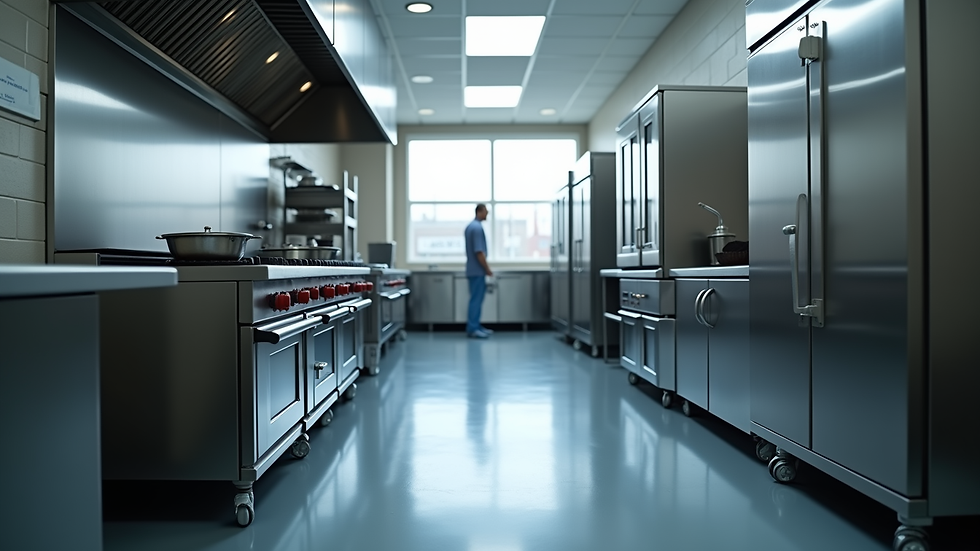
Most first-time restaurant owners spend heavily on interiors and dramatically underestimate their kitchen equipment budget. They buy cheap, they buy wrong, and then they spend twice fixing it.
A domestic refrigerator in a commercial kitchen. A home-use mixer for bulk prep. A coffee machine that breaks down in month two of operations.
The real cost of cheap equipment:
Frequent breakdowns during peak service
No after-sales support from unknown vendors
Wrong equipment for your volume and menu
Replacement costs that exceed what you "saved"
What to do instead:
Allocate your budget honestly. Speak to people who actually know commercial kitchen equipment — not just someone trying to make a sale. The right equipment, bought once, will serve you for years. The wrong equipment, bought cheap, will drain you every single month.
At The Centrl, we'd rather tell you what you actually need — even if it means a smaller order — than sell you something that won't last your first year.
❌ Mistake 3 — Trusting the Wrong Vendors
This is the silent killer of restaurant businesses.
You find a supplier. The first order is great. The second is decent. By the third, deliveries are late, quality has dropped, and suddenly your calls aren't being picked up. Sound familiar?
The HoReCa industry runs on trust — and that trust is broken constantly. Vendors overpromise. Deliveries are delayed. Products don't match samples. And the restaurant owner pays the price — sometimes literally, mid-service.
Signs of a bad vendor:
Says yes to everything without checking stock
No clear after-sales policy
Disappears after payment is made
Pushes product without understanding your need
What to do instead:
Build relationships with vendors who are willing to say NO when they can't deliver. That honesty — as uncomfortable as it sounds — is the most valuable thing a supplier can offer you.
❌ Mistake 4 — No Standard Operating Procedures (SOPs) from Day One
Most restaurants wing it in the beginning. Recipes are in the chef's head. Cleaning schedules don't exist. Inventory is managed by memory.
Then the chef quits. Or the health inspector visits. Or you try to open a second location and realize nothing is documented, nothing is repeatable, and everything lives in one person's head.
What to do instead:
Write your SOPs before you open — not after you're drowning. Document everything. Recipe cards. Opening and closing checklists. Equipment maintenance schedules. Staff training manuals. Hygiene protocols.
It feels excessive on day one. It feels essential by day 90.
❌ Mistake 5 — Ignoring the Math Until It's Too Late
Passion doesn't pay rent. Numbers do.
Most new restaurant owners have a vague sense of their costs but rarely sit down and do the hard math — food cost percentage, labour cost, occupancy cost, breakeven analysis, average ticket size needed per day to survive.
The numbers every restaurant owner must know:
Food cost should ideally be between 28–35% of revenue
Labour cost should sit between 25–35%
Occupancy cost should not exceed 10–15%
That leaves you very little room for error — which is why every rupee of unnecessary cost matters
What to do instead:
Before you open, build a simple P&L projection. Know your breakeven. Know how many covers you need per day to stay alive. And revisit the numbers every single month — not just when things go wrong.
❌ Mistake 6 — Building for Instagram, Not for Operations
Beautiful restaurants that don't work are everywhere.
The exposed brick. The neon sign. The artisanal menu with 60 items. The hand-painted mural that cost more than the cold storage unit.
Aesthetics matter — but a kitchen that can't handle your volume, a storage area that's too small, and a counter that creates chaos during peak hours will cost you far more than a plain wall ever would.
What to do instead:
Design your kitchen first. Then design your dining space. Your kitchen layout determines your speed, your hygiene, your staff efficiency, and ultimately your profitability. Never compromise the back of house for the front.
❌ Mistake 7 — Doing Everything Alone
The romantic idea of the solo restaurateur is a myth.
Running a restaurant requires skills across cooking, finance, HR, marketing, procurement, logistics, and customer service — often simultaneously, often on the same Tuesday afternoon.
No one person is great at all of these. Those who try to be burn out quietly and quickly.
What to do instead:
Know your strengths. Build a team or a network around your gaps. Find a reliable procurement partner so you're not chasing 10 vendors. Find an accountant who understands F&B. Find a mentor who has already made the mistakes you're about to make.
The One Thing That Ties All of This Together
Every mistake above has a common thread — the absence of honest guidance at the right time.
Nobody told you equipment budgets matter more than interiors. Nobody warned you about unreliable vendors. Nobody sat you down and walked you through the math before you signed the lease.
That gap — between what the industry knows and what new operators are told — is exactly why The Centrl exists.
We've run kitchens. We've owned cafés. We've worked with everyone from street-level QSRs to five-star hotel chains. We know where the money leaks. We know which equipment lasts and which doesn't. And we know that sometimes the most valuable thing a partner can say is —
"Don't do that. Here's why. Here's what to do instead."
Before You Open — A Quick Checklist
✅ Have you worked inside a restaurant before committing?
✅ Is your kitchen equipment budget realistic and commercial-grade?
✅ Do you have vendors you can genuinely trust — not just the cheapest option?
✅ Do you have basic SOPs documented before day one?
✅ Do you know your breakeven number?
✅ Is your kitchen designed for operations — not just aesthetics?
✅ Do you have a support system — partners, mentors, specialists?
Final Word
The restaurant industry is one of the most rewarding — and most unforgiving — businesses in the world. It demands everything from you and gives back only when you give it the respect it deserves.
But with the right knowledge, the right partners, and the right mindset going in — it can be everything you dreamed it would be.
Start smart. Build honest. And never, ever cheap out on your kitchen.
At The Centrl, we help restaurants, cafés, cloud kitchens, and hotels make better procurement decisions — from kitchen equipment and coffee machines to crockery, packaging, and housekeeping essentials. We've worked with 1,000+ brands across India, and we bring that experience to every conversation.


Comments